



Salut les Cubains + Soy Cuba

How do images shape Cuba, and how do these images then decide how we look at the country? In the light of Bert Danckaert’s exhibition El Jardín de los Cerezos (5 sept – 11 okt) in Plus-One Antwerp, De Cinema brings together two films, each looking from a different angle and historical context to Cuba: Agnès Varda’s SALUT LES CUBAINS and Mikhail Kalatozov’s SOY CUBA.
SALUT LES CUBAINS — Agnès Varda, 1963
Four years after the Cuban Revolution, Agnès Varda traveled to Cuba with a Leica. She made more than 4.000 photographs. Back in Paris, she selected about 1.500 images which she filmed, one by one, in an animated way. This is how SALUT LES CUBAINS was born: a film in which still images come to life through editing, music, rhythm, and sound. Inspired by her friend and colleague filmmaker Chris Marker, who shortly before made LA JETÉE (1962), Varda in turn made cinema from photography.
She shows a Cuba full of energy, music, and optimism. The film focuses less on revolutionary doctrine than on the people who live through the revolution: labourers, students, artists, musicians, and dancers. Varda summarized her own film as “socialism and cha-cha-cha.”
At the same time, SALUT LES CUBAINS is inseperably connected to the political and historical context in which the film was made. As Western, left-wing artist, fascinated by the socialistic project, Varda not only made a portrait of a revolutionary society, but she also documents the way in which Cuba is seen and depicted from a Western gaze.
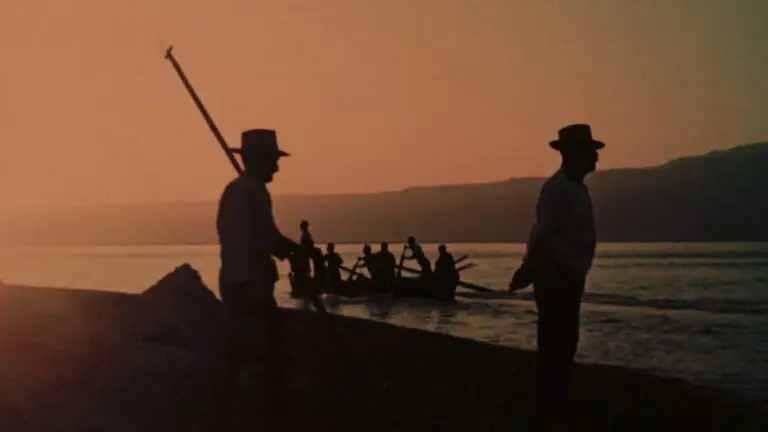
SOY CUBA — Mikhail Kalatozov, 1964
Where Varda starts from photograhy and daily life, Mikhail Kaltozov chooses for an expressive cinematographic approach. SOY CUBA is a monumental and strongly stylized epic about Cuba on the eve of and during the revolution.
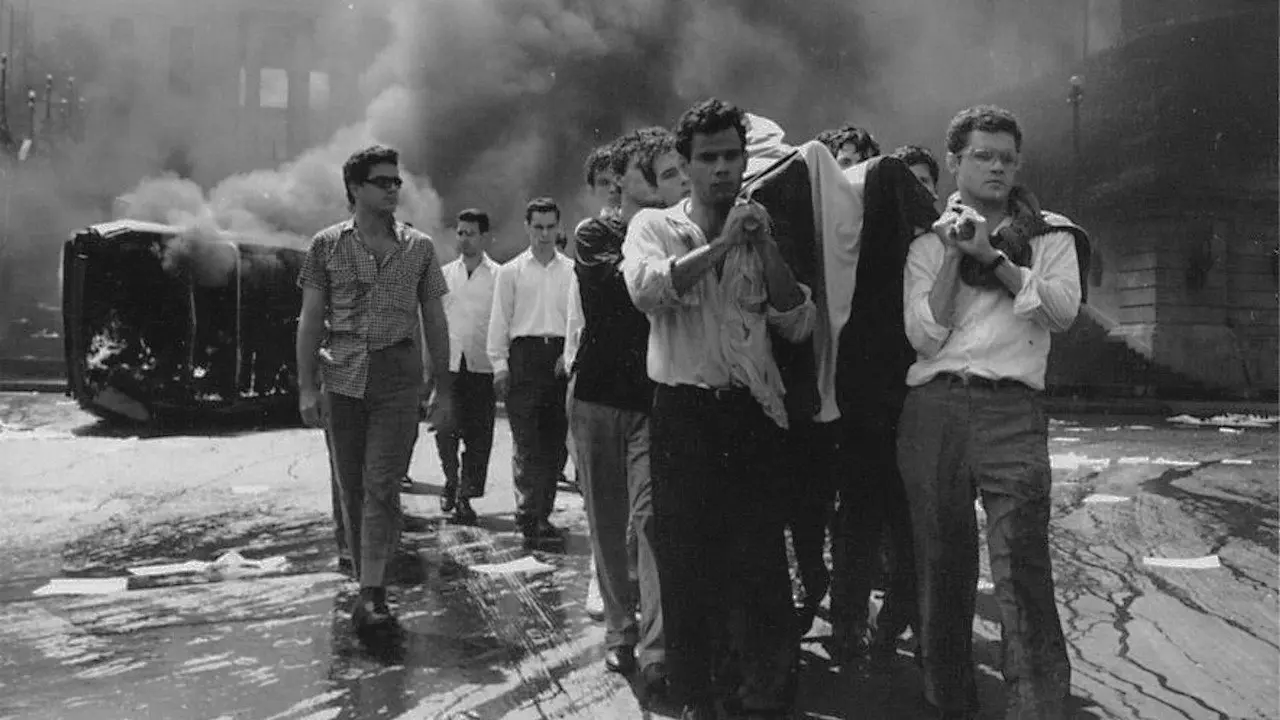
The film tells four tales: from a young woman in Havana and a farmer who loses his sugarcane fields, to students revolting against the regime. Together, they illustrate a society in which the old capitalistic system has to make way for the revolution.
Kalatozov and his screenwriter, Russian poet Jevgeni Jevtoesjenko, don’t make a distant historical reconstruction but give explicitly shape and meaning to the events. With long, spectacular camera movements, extreme perspectives and a strongly staged visual language, the revolution almost becomes mythical.
Because of that, SOY CUBA is an outspoken product of the Cold War and the political imagination that went along with it. At the same time, the film transcends its propogandistic dimension because of Kalatozov’s extraordinary cinematography and visual ingenuity. Decades after the original release, the film was again brought to the attention of, among others, Martin Scorsese and Francis Ford Coppola. The film will be screened in 4K.
From revolution to memory
Precisely because of their different approaches, the two films will engage in dialogue with Bert Danckaert’s El Jardín de los Cerezos. Together, the three works span over sixty years of Cuban imagery: from the energy of a young revolution in SALUT LES CUBAINS, across the cinematographic myth of SOY CUBA, to a contemporary Cuba in El Jardín de los Cerezos, in which the big ideological stories have largely lost their persuasiveness.
Inspired by Tsjechov’s The Cherry Orchard, Cuba becomes with Danckaert a metaphor for a society inbetween revolutionary ideals, historical memory, and exhaustion. Through cinemas, churches and classrooms, the exhibition researches how stories and convictions are told and passed on. This way, the three works center around one fundamental question: how does reality become an image, and how will that image decide our reality?
The two films will be introduced by film professor Philippe Meers and photographer Bert Danckaert.
In the afternoon, the same programme will be organized, with a 30 min. lecture and reflection by film professor Philippe Meers and photographer Bert Danckaert inbetween the film screenings.
Showtimes
All screenings have ended
PROGRAMME
20:00 - SALUT LES CUBAINS + short introduction (5 min.)
20:35 - Short break (15 min.)
20:50 - SOY CUBA + short introduction (5 min.)
23:15 - End