




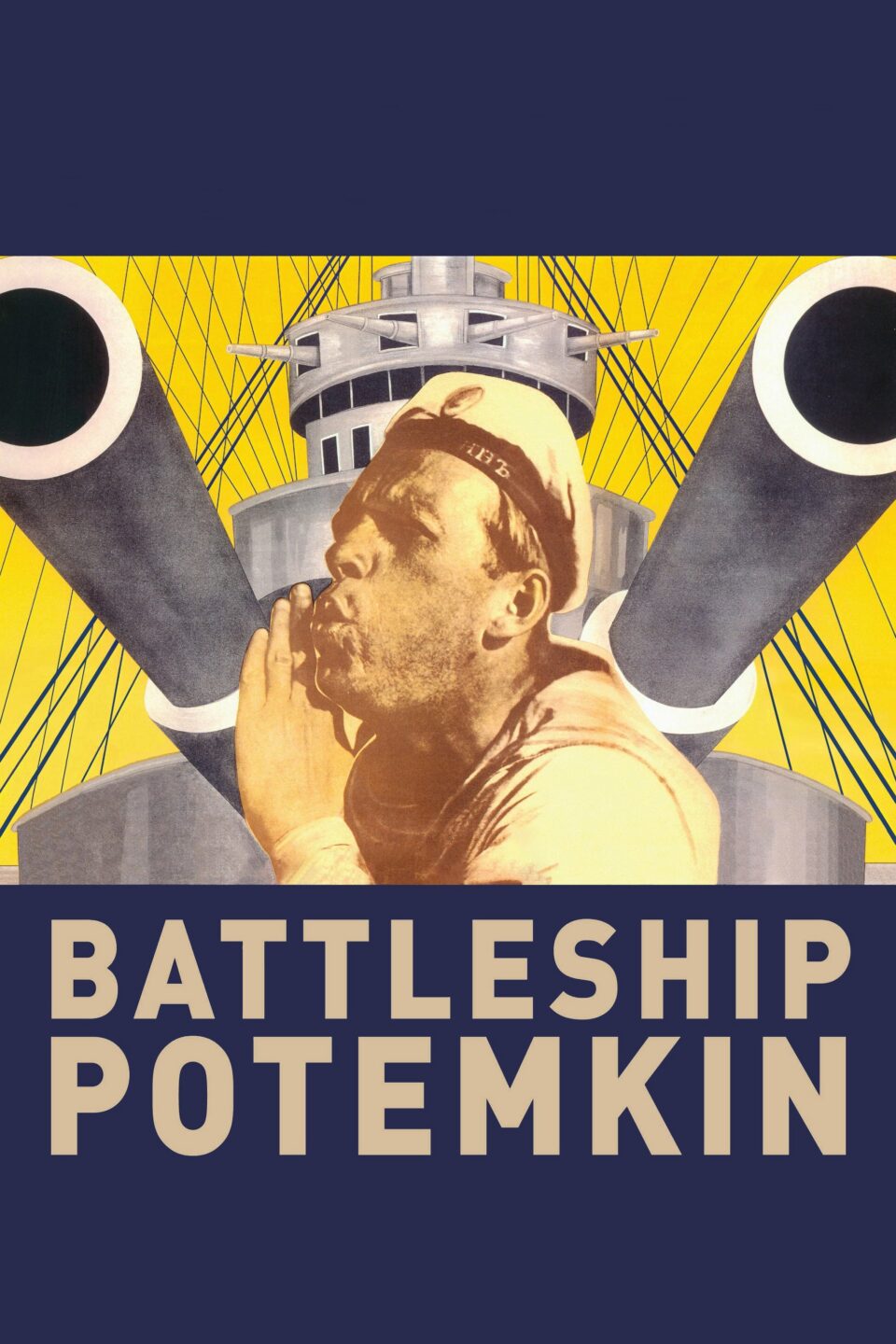
Pantserkruiser Potemkin
“Shoulder to shoulder. The land is ours. Tomorrow is ours.”
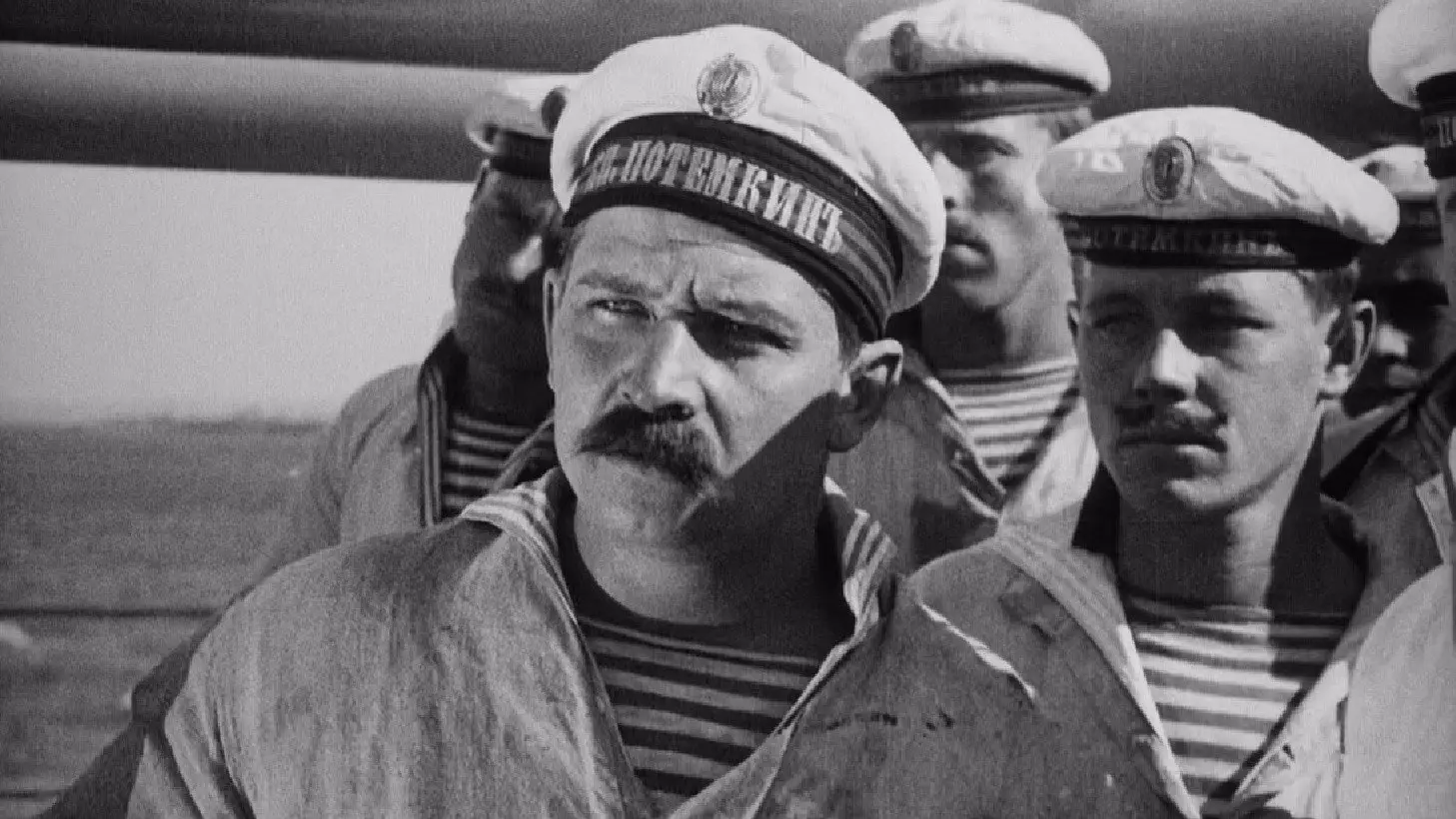
A movie that shook the world. That’s one way to describe PANTSERKRUISER POTEMKIN. Sergei Eisenstein’s silent masterpiece follows the uprising that broke out in 1905 among the crew of the Russian battleship Potemkin, who rebelled against their inhuman treatment. The movie was banned in almost every country at one point or another because of its revolutionary zeal.
PANTSERKRUISER POTEMKIN was commissioned by the All-Russian Central Executive Committee, honouring the 20th anniversary of the first Russian revolution. Soviet revolutionary Nina Agadzhanova was asked to write the screenplay and the 27-year-old Eisenstein was assigned to direct her script, although his final interpretation differed a lot from the original script.
A mutiny erupts aboard a Russian naval vessel when sailors refuse to eat rotten meat. This sparks a revolution that spreads to the port city of Odessa. When the rebels are supported by the people of Odessa, where the battleship anchors, the Tsar’s troops intervene and brutally massacre civilians. These vicious acts are visualised in the famous Odessa Steps scene, a montage sequence that redefined the art of editing in film. Sergei Eisenstein’s theory uses montage to create visceral emotional responses. In PANTSERKRUISER POTEMKIN this leads to a powerful piece of Soviet propaganda and to one of the most influential films in cinema history. With adepts such as directors Orson Welles, Billy Wilder, Brian De Palma, Claire Denis and Kathryn Bigelow, painter Francis Bacon and pop duo Pet Shop Boys, who composed a new soundtrack for the film in 2005.
Eisenstein’s propaganda masterpiece rewrote the rules of film editing. The Odessa Steps sequence is the most analysed scene in film history, demonstrating how montage can manipulate time and provoke deep emotion. The film showed how cinema can produce a profound psychological impact by using colliding images and rhythm to radicalise the viewer. Which is one of the reasons why the film was banned in so many other countries after its release. But the influence of PANTSERKRUISER PPOTEMKIN reaches far beyond mere politics. It taught filmmakers how to construct action and suspense. PANTSERKRUISER POTEMKIN remains an ultimate example of cinema as a weapon, as a medium that can incite revolution and shape history.
Showtimes

The film will be accompanied by pianist Hilde Nash, who will improvise a score live.
We incur an additional cost for Cineville, 10 ride passes and our annual passes.