






L’Amour à la mer

Guy Gilles is the forgotten queer prodigy of the French Nouvelle Vague. The period we know from the canonised works of directors such as Godard and Truffaut also produced many other filmmakers. Gilles’ work sought not only to experiment with the formal and narrative conventions of cinema, but also with its heteronormativity. In ABSENCES RÉPÉTÉES (1972) and LE CRIME D’AMOUR (1981), his fluid vision of sexuality and queer aesthetics is beautifully expressed.
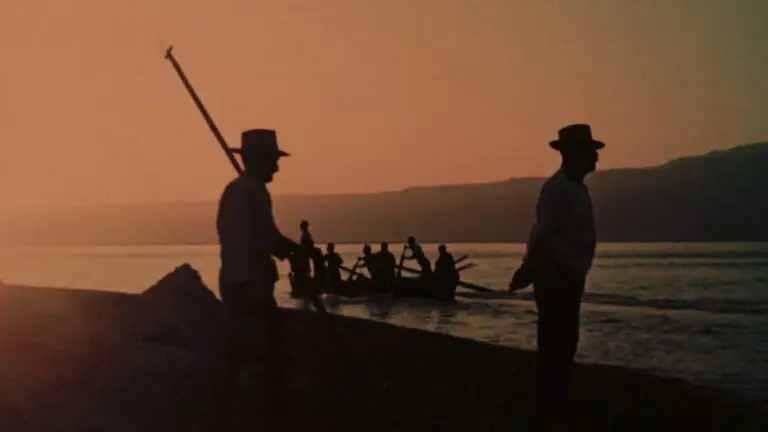
Gilles, who was born in Algeria, was already making short films when he was twenty, in which the themes that would later characterise his feature films were already evident: exile, memory, romance. His feature-length debut, L’AMOUR À LA MER, which, inexplicably, was never released in cinemas, tells the story of an impossible love affair between a young woman and a sailor, whilst also serving as an urban symphony of Brest and Paris.
Gilles’ work is brimming with beauty, poetry and sentiment, alternating between colour and black-and-white photography, whilst the elliptical editing invites one to reflect on the passing of time. The refinement, but also the naivety, that permeated his films meant that they were consigned to obscurity for more than five decades. It is precisely these qualities which, 25 years after his death, demonstrate the need to include Guy Gilles in future history books as one of the most important voices of the French New Wave
Showtimes

The screening of 17 March 2027 will be preceded by a lecture on the French nouvelle vague at 17:00 by Gertjan Willems.