




In the Mood for Love

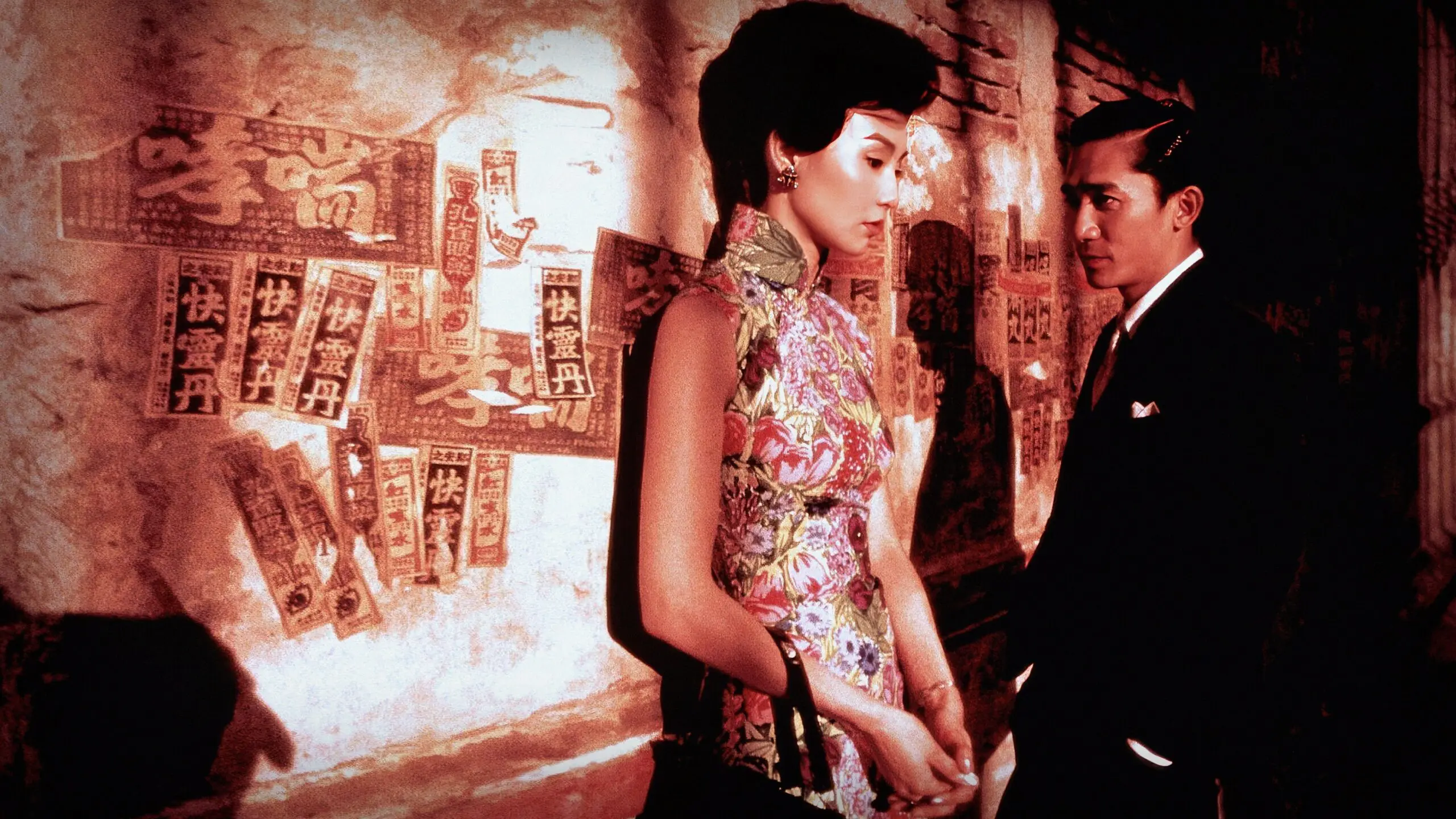
With IN THE MOOD FOR LOVE, Wong Kar-wai creates a film that reduces everything to its essence: glances, rhythm, space, and longing. In the sweltering Hong Kong of the 1960s, two neighbors, played with subtlety and restraint by Maggie Cheung and Tony Leung, discover that their partners are having an affair, and they cautiously draw closer to one another without ever truly crossing the line. What follows is not a traditional love story, but a choreography of missed opportunities and unspoken desire.
The film’s visual style, crafted by director of photography Christopher Doyle, is defining: tight frames, mirrors, doorways, and slow camera movements create a world in which the characters are literally trapped within their surroundings and emotions. Every image is carefully composed; every repetition builds a rhythm that is as hypnotic as it is suffocating.
Shigeru Umebayashi’s music is inextricably linked to that rhythm. The melancholic waltz returns again and again like an emotional echo, a loop in which longing lingers without resolution, in which the sense of time stretches out further and further and repeats itself.
Released at the very moment Hong Kong cinema was making its international breakthrough, IN THE MOOD FOR LOVE has become a key film in the cinematic canon. Praised for its radical mastery of form and emotional precision, the film serves as a reference point for cinema that achieves maximum intensity with minimal means, and that does not show what happens, but what might have happened


