





Riso amaro



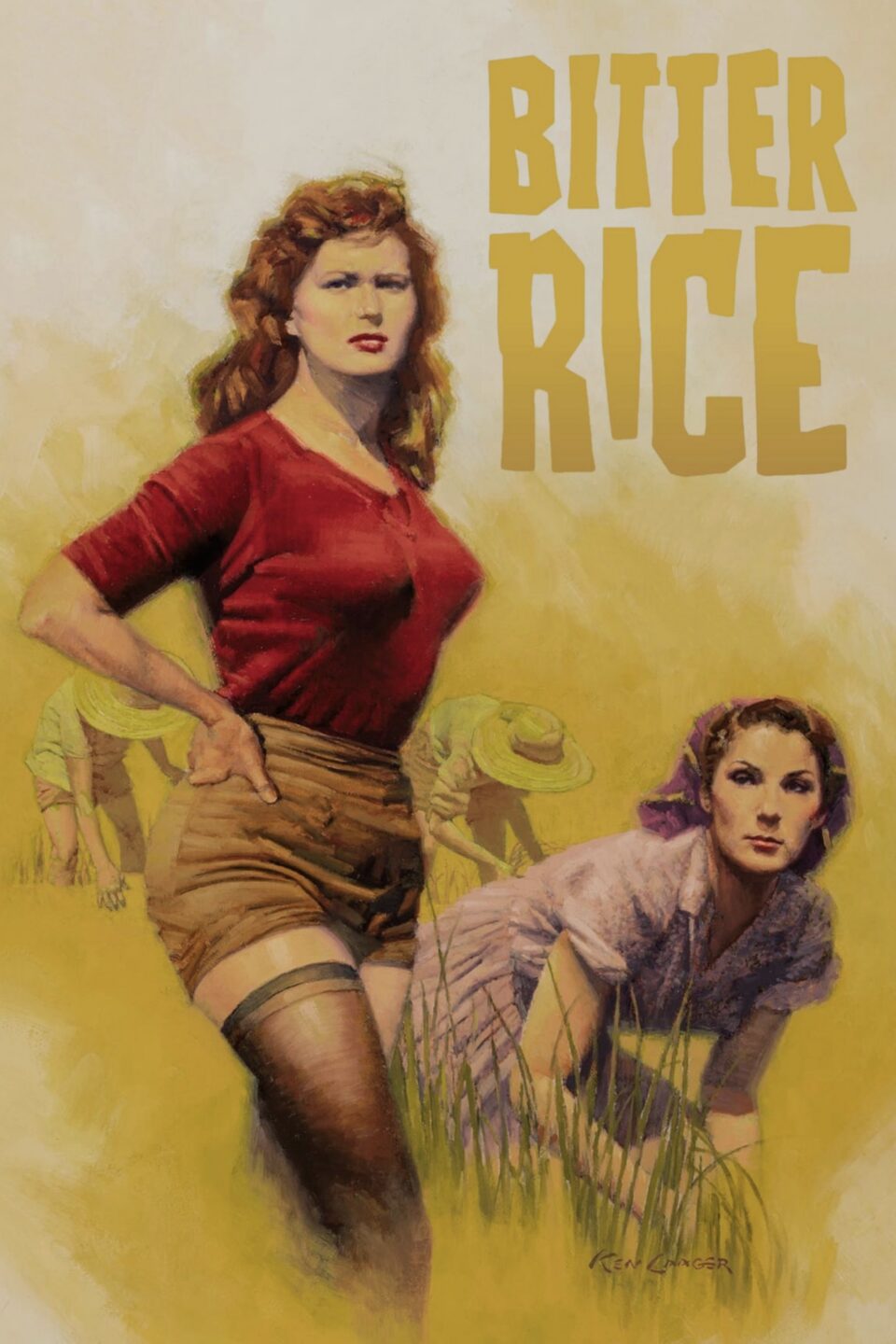
With RISO AMARO (or BITTER RICE), producer Dino De Laurentiis and director Giuseppe De Santis created one of the few films that derive from categories such as neorealism as well as pulp fiction with elements of melodrama, thriller and crime film. RISO AMARO has much to say about the pitiable working conditions in which the underpaid mondine, female rice field workers, had to harvest and survive, but does so in the shape of a heist movie with convincing bad guy, femme fatale and passionate love triangle.
Silvana Mangano portrays one of the hundreds of women who broke their backs day in day out in the rice fields of the Po Valley. She is courted by two men: the respectable Marco and the fugitive Walter. The choice that Silvana makes will not only influence her life, but the lives of all of the workers in the valley as well.
Mangano was cast in her first leading role because she reminded the casting agent of an ‘Italian Rita Hayworth’. Her costar, the American Doris Dowling, had emigrated to Italy after WOII to revitalise her acting career and convincingly portrays a thief trying to get back on the right path. Italian footballer Raf Vallone made the successful transition to acting and his portrayal of Marco launched an international career, with roles in films such as Sidney Lumet’s A VIEW FROM THE BRIDGE (1962) and Francis Ford Coppola’s THE GODFATHER PART III (1990).
De Santis conceived the concept of his second film when he returned from Paris and was waiting for his connection in the central station of Milan, together with a crowd of boisterous mondine on the way home after weeks of work in the rice fields. At that moment, De Santis decided to devote a film to the women he crossed paths with on that train platform. The opening sequence of RISO AMARO is a one-on-one ode to that moment.
What makes RISO AMARO stand out, is its focus on the work and lives of women. The scenes in the rice fields are so realistic that they could pass for documentary images. With its long takes, focus on the ‘real’ lives of rice field workers, location shoots and social issues, RISO AMARO became an atypical milestone of the postwar Italian cinema and the neorealistic movement, with its ode to the American movie culture and genres.