

Stray Dog



Film history is the story of films constantly building on one another. If one contemporary director knows this, it’s Paul Thomas Anderson, PTA for professional purposes. In PTA & HIS MASTERS we take a look at the unofficial filmic predecessors of Paul Thomas Anderson. We place the director – arguably one of the most important directors of his generation – next to the influences he unabashedly cites in his work. In PTA & HIS MASTERS we link INHERENT VICE to Akira Kurosawa’s STRAY DOG.
Detective movie, police procedural or buddy cop film… Akira Kurosawa didn’t choose one or the other for his STRAY DOG, but picked them all.
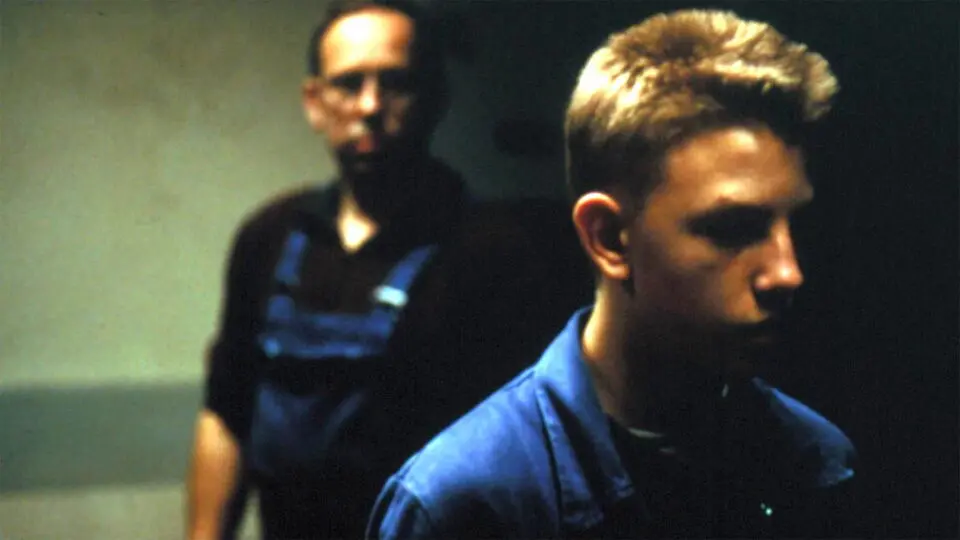
During an unforgiving heatwave in the post-war Tokyo, Toshirô Mifune plays the inexperienced detective Murakami who makes a big mistake: his gun is stolen during a bus ride. Encouraged by his superior, he goes undercover to look for his missing service weapon. This investigation leads him to the poverty-stricken slums of the city, where the criminal underworld also takes up residence. When the weapon is linked to a series of crimes, the experienced detective Satô joins the investigation. While Murakami sweats profusely, from the unbearable heat and anxiety, despair starts to take over.
In STRAY DOG, Kurosawa navigates between the personal crisis of the rookie detective who makes a career-breaking mistake and the crisis that had Japan in its hold during the reconstruction of the post-war devastation. Kurosawa skillfully connects the crime genre with social criticism. We not only see a detective on the edge of a nervous breakdown, but an entire nation struggling with the trauma of WOII and the horrific bombings of Hiroshima and Nagasaki. The main character feels for the lost souls who do everything to survive in inhumane conditions. Kurosawa also shows the influence of America on japan after the war, with for example a fascination for baseball. But it was Kurosawa who would have an undeniable impact on what would later be considered an American film genre: the buddy cop movie. With STRAY DOG, Kurosawa popularised the successful formula where an inexperienced police officer is partnered with a seasoned detective. A trope that would be reused throughout film history.
It’s that simple premise that would inspire PTA as well. “This is what I call a ‘pop song’ movie. You can say it in one sentence: a rookie cop loses his gun. It’s unbelievable.” And PTA wanted to achieve that simplicity in his later work too. In INHERENT VICE, PTA landed on a story about a detective who tries to solve a kidnapping. In addition, Kurosawa manages to critically capture the painful postwar recovery in Tokyo, sharpened by having the story take place during an extreme heatwave. In INHERENT VICE, PTA chooses the political setting of the US in the 70s, which was ruled by extreme paranoia after the crime spree led by the Manson family.
Everyone knows the feeling of a bad day only getting worse. You need a master like Kurosawa to turn that feeling into a perfect film and even adds a little bit of wisdom on the go. “Bad luck either makes a man or breaks him. Depending on how you take it, bad luck can be a big break.”
Showtimes
All screenings have ended