







The Eternal Breasts
It’s a remarkable feat to become the second Japanese woman ever to take a seat in the director’s chair. That honour is bestowed upon Kinuyo Tanaka (1909-1977). Tanaka’s career spanned more than 50 years. With over 250 acting credits to her name, the hugely popular Tanaka was mostly known as an actress for masters Yasujirō Ozu, Mikio Naruse and especially Kenji Mizoguchi, with whom she made 15 films. But in 1953 Tanaka made a bold move: she put in a request with Nikkatsu Studio to direct her first film. This, in an industry where only Tazuko Sakane managed to do so before her. Even though the application was opposed by none other than mentor Mizoguchi – an act that would end their professional relationship – Tanaka was able to make her directorial debut with LOVE LETTER (1953) with the new studio Shin Toho. Luckily she had help from Ozu (who would write the screenplay for her second movie THE MOON HAS RISEN) and Naruse.
It was Tanaka’s ambition to allow women to take the foreground in her work. Real women, who explore their sexuality and femininity in a patriarchal society where their place is often predetermined. The women in her films show a resolute sense of freedom. Tanaka never shied away from provocation and gave the screen to mistresses, prostitutes, divorcées, who were the heroines as much as they were the victims of social bounds.
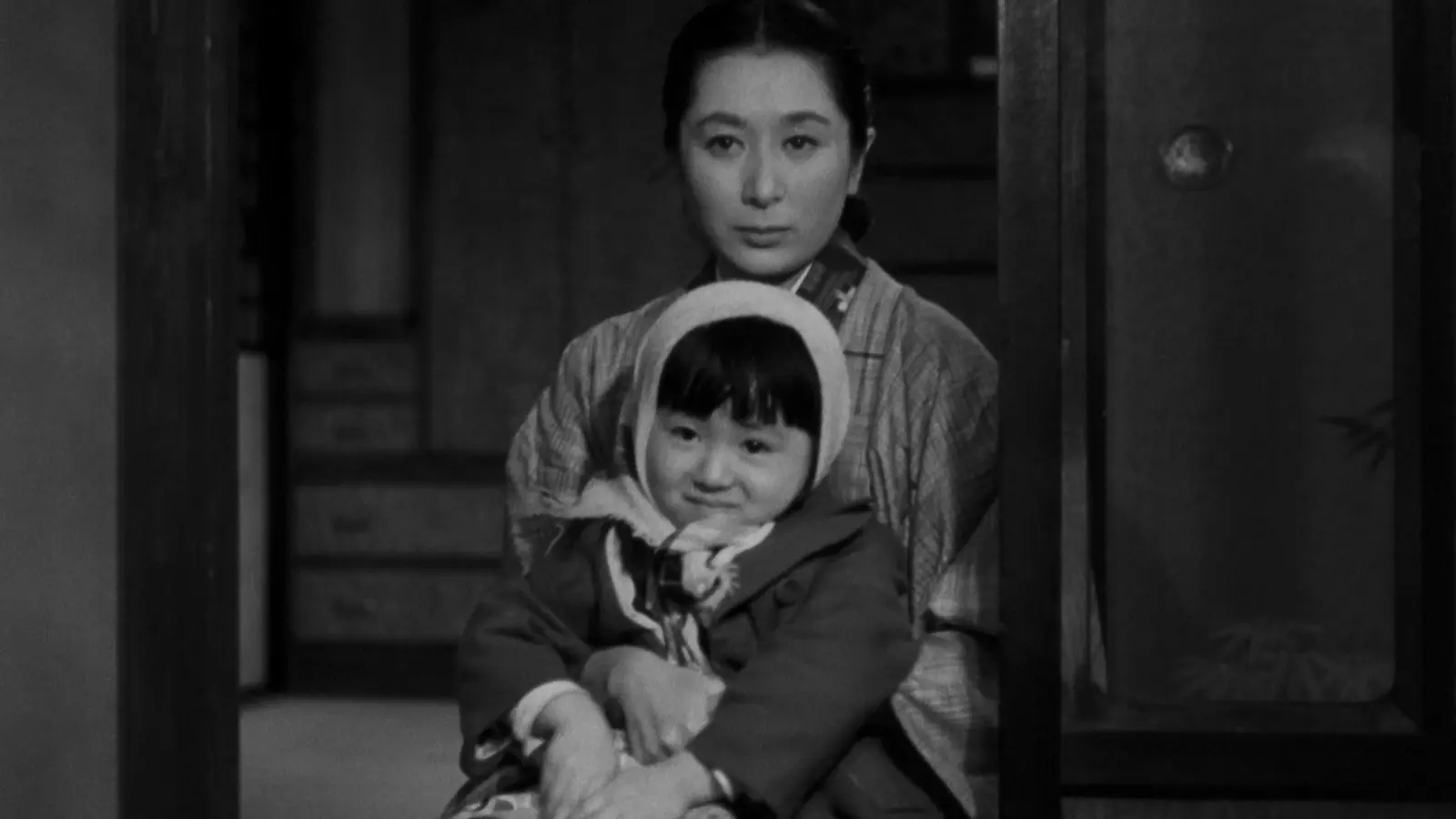
In THE ETERNAL BREASTS (a literal translation of the Japanese title, which is often anglicised as FOREVER A WOMAN), Tanaka and screenwriter Sumi Tanaka (no relation) tell the true story of tanka poetess Fumiko Nakajo. When Fumiko discovers that her husband is unfaithful, she moves in with her mother. She navigates the divorce and motherhood, while simultaneously chasing her creative dream to become a poet. But then disaster strikes. Just when she has pieced her life together again, Fumiko is diagnosed with terminal breast cancer.
Tanaka’s direction is filled with such sensitivity and is developed with such aim, that the heaviness of the subject is lightened by the beauty of the images. Just like her contemporary Ozu, Tanaka has a love for frame-within-the-frame compositions. But different from Ozu, Tanaka chooses asymmetry in her framing to reflect the transformation of Fumiko’s body (after a double mastectomy) and the uneven syllables of her tanka poems.
With THE ETERNAL BREASTS, Tanaka tackled a daring subject for viewers in the fifties. She depicts the heart wrenching reality that hits 1 in 8 women in the world. But Tanaka allows her character to be more than her illness. Fumiko is a woman. With the sexuality, creativity and self-exploration that come with it.
Showtimes


The screening of 21 January 2027 will be preceded by a lecture on Japanese cinema at 19:00 by Wouter Hessels.
Trauma surrounding cancer treatment


