



American Graffiti




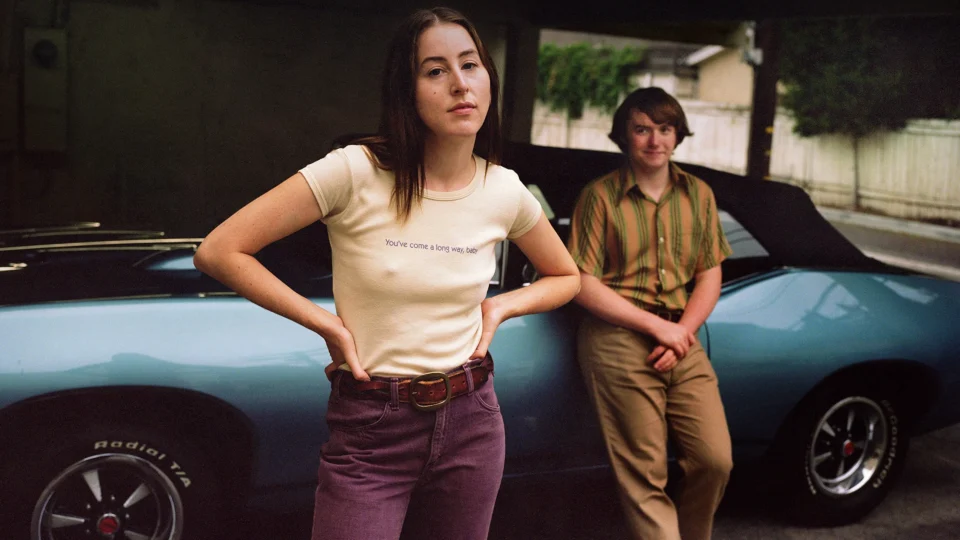
Film history is the story of films constantly building on one another. If one contemporary director knows this, it’s Paul Thomas Anderson, PTA for professional purposes. In PTA & HIS MASTERS we take a look at the unofficial filmic predecessors of Paul Thomas Anderson. We place the director – arguably one of the most important directors of his generation – next to the influences he unabashedly cites in his work. In PTA & HIS MASTERS we link LICORICE PIZZA to George Lucas’ AMERICAN GRAFFITI.
On the last day of summer in 1962, friends Curt (Richard Dreyfuss), Steve (Ron Howard), Terry (Charles Martin Smith) and John (Paul Le Mat) aimlessly cruise along the streets of their small town in California, while a mysterious DJ plays classical rock ‘n’ roll records. It’s the last night before their adult lives begin and Steve’s girlfriend, a rude teenager and an angel in a Thunderbird cause more tension than the boys can handle.
With AMERICAN GRAFFITI, pre-STAR WARS George Lucas created one of the most memorable teenage films in film history. Lucas uses the right dose of nostalgia and disillusionment that rule during the last innocent days of teenagers on the verge of adulthood. The amazing soundtrack sets the tone for every scene and Lucas opted for diegetic music that the characters in the movie listen to, which makes the music part of the story itself. The movie functions as an interesting time document as well and captures a turning point in pop culture when rock ‘n’ roll gives way to pop at the top of the charts.
AMERICAN GRAFFITI is Lucas’ most personal film and a love letter to his youth in the 60s, when “cruising” (driving around aimlessly to pick up girls) was intrinsically linked to being young. Led by the advice of his good friend and producer Francis Ford Coppola to make a personal film, Lucas came up with the idea for AMERICAN GRAFFITI. Just like Lucas and his ultimate coming-of-age classic, PTA is also inspired by personal stories and his own experiences. Lucas had his movie take place in Modesto, California, where he grew up himself. PTA used San Fernando Valley, his own hometown as the décor of LICORICE PIZZA.
One of PTA’s strengths is evoking a specific setting in his films. Lucas did this as well in 1973 when he reached back to the nostalgia of a time when everything seemed much easier. George Lucas shot AMERICAN GRAFFITI in Techniscope. This film format created a grainy image, similar to that of 16mm films. With LICORICE PIZZA, PTA wanted to create the same naturalistic look an lo-fi charm. To achieve this, he worked with limited and often diegetic lighting, such as only using street lighting, which was an important stylistic choice in AMERICAN GRAFFITI as well.
PTA cheated off AMERICAN GRAFFITI on a narrative level too. Both directors opt for narrative vignettes divided into episodes. Lucas taught PTA to cast actors that really looked like teenagers. AMERICAN GRAFFITI and LICORICE PIZZA follow life as it is for real-life youngsters, pimples and all, while they navigate the murky waters between youth and adulthood. PTA screened AMERICAN GRAFFITI for his cast and crew during the shoot of LICORICE PIZZA to give them a sense of what he had in mind.
“There’s a great big beautiful world out there”, reflects legendary DJ Wolfman Jack in AMERICAN GRAFFITI, “and here I sit, sucking on popsicles.” Lucas shows us the power and unnerving side of making choices at what seems to be the beginning of your life. But you know, popsicles aren’t so bad…
Showtimes
All screenings have ended