




D’Est
Chantal Akerman was fifteen years old when she decided she would make films. That resolution came after watching Jean-Luc Godard’s PIERROT LE FOU. School life was not for her. “When I was a child, I went to a conventional bourgeois high school. I thought it was a question of class. I attributed my non-conformity to the fact that I was a Jew. I didn’t attribute it to gender then, but I realized later that the other girls were already built to fit a young woman’s role in a normative society. My parents didn’t have the time.” So, what she would become, she decided herself. And that would be filmmaker.
Akerman not only broke societal conventions, but cinematic conventions as well. In her work, she radically reinterprets the essence of cinema. As an autodidact, Akerman wasn’t moderated by the limitations of traditional film education. What did weigh on her, was the past of het Jewish parents: mother Nelly – with whom she shared an unbreakable bond – survived the horrors of Auschwitz, but lost her parents, father Jacques – who remained in the background in the family – spent the war in hiding. At home, Akerman kept quiet, until she spread her wings when she turned eighteen. First, she travelled to Paris, then further away to New York. “I was finally living,” she said about that period. In 1973, she returned to Europe, where film funding offered more opportunities.
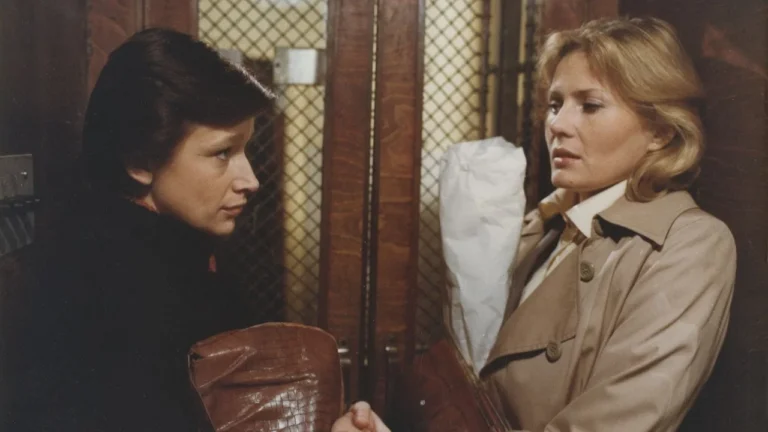
Not only her ancestral background, but the rise of women’s rights movements in the seventies would become a blueprint for her films. Masterpiece JEANNE DIELMAN, 23, QUAI DU COMMERCE, 1080 BRUXELLES, with militant feminist and nouvelle vague icon Delphine Seyrig in the title role, she directed when she was 24 and was ambitious, radical and was received as outspokenly feminist. But Akerman refused labels that were attributed to her identity. According to her, it wasn’t being a woman, her Jewish heritage, or being a lesbian that defined her, but being a daughter. Akerman’s work is personal and nearly always a tribute to her mother Nelly. Mother and daughter were intertwined and Akerman ended her life in 2015, a couple of months after her mother’s death.
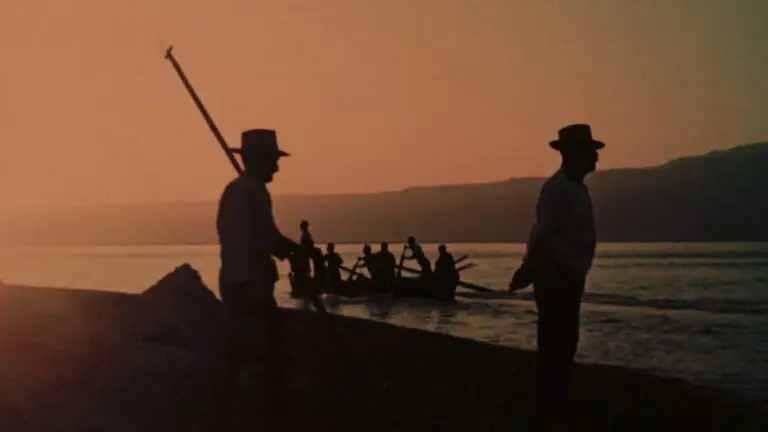
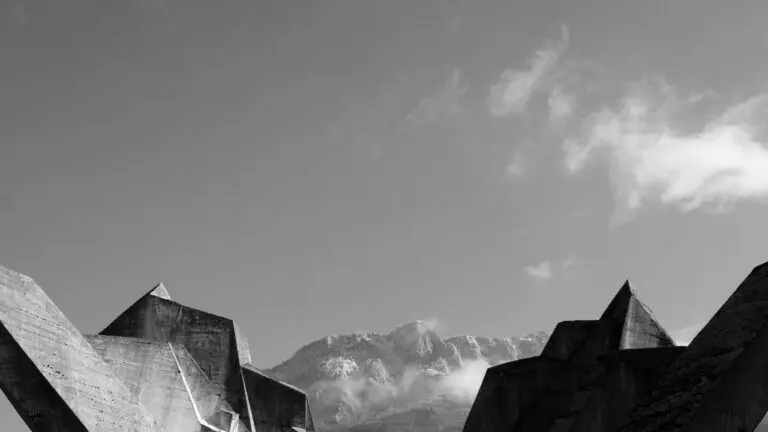
Akerman was also an experienced and experimental documentary director. “When I make a documentary film, I become a sponge, soaking up everything.” In D’EST she travels across former Soviet territories after the end of the eastern Block and the demolition of the Berlin Wall. Still lives are strung together and Akerman’s static camera silently witnesses a turbulent time, people and their memories, landscapes and buildings. These testimonies move from West to East, pass through Poland, Ukraine and Russia, and come together in an impressionistic cinematic poem.
Showtimes


The screening will be preceded by a lecture on Chantal Akerman at 17:00 by Steven Jacobs.


