


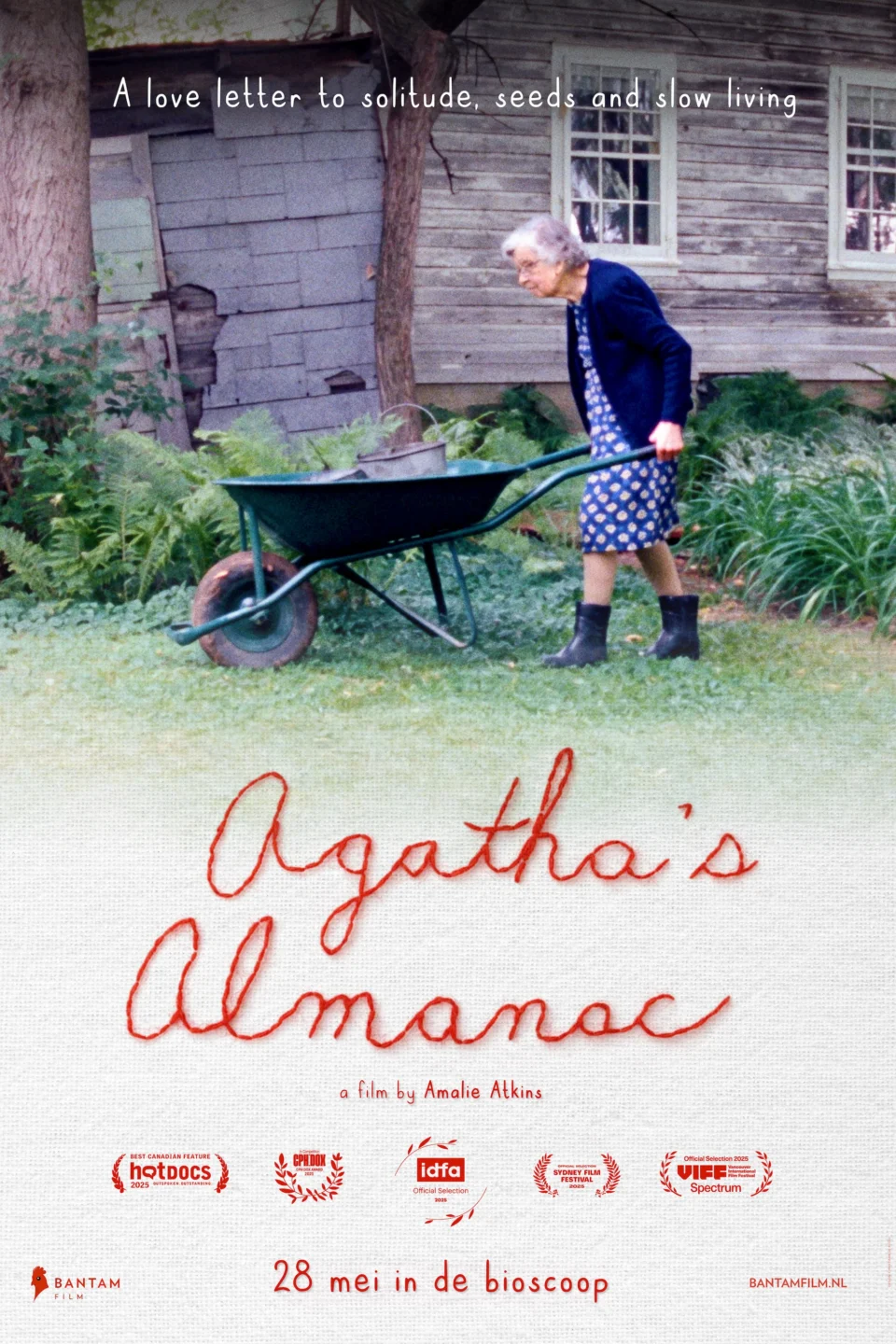
Agatha’s Almanac


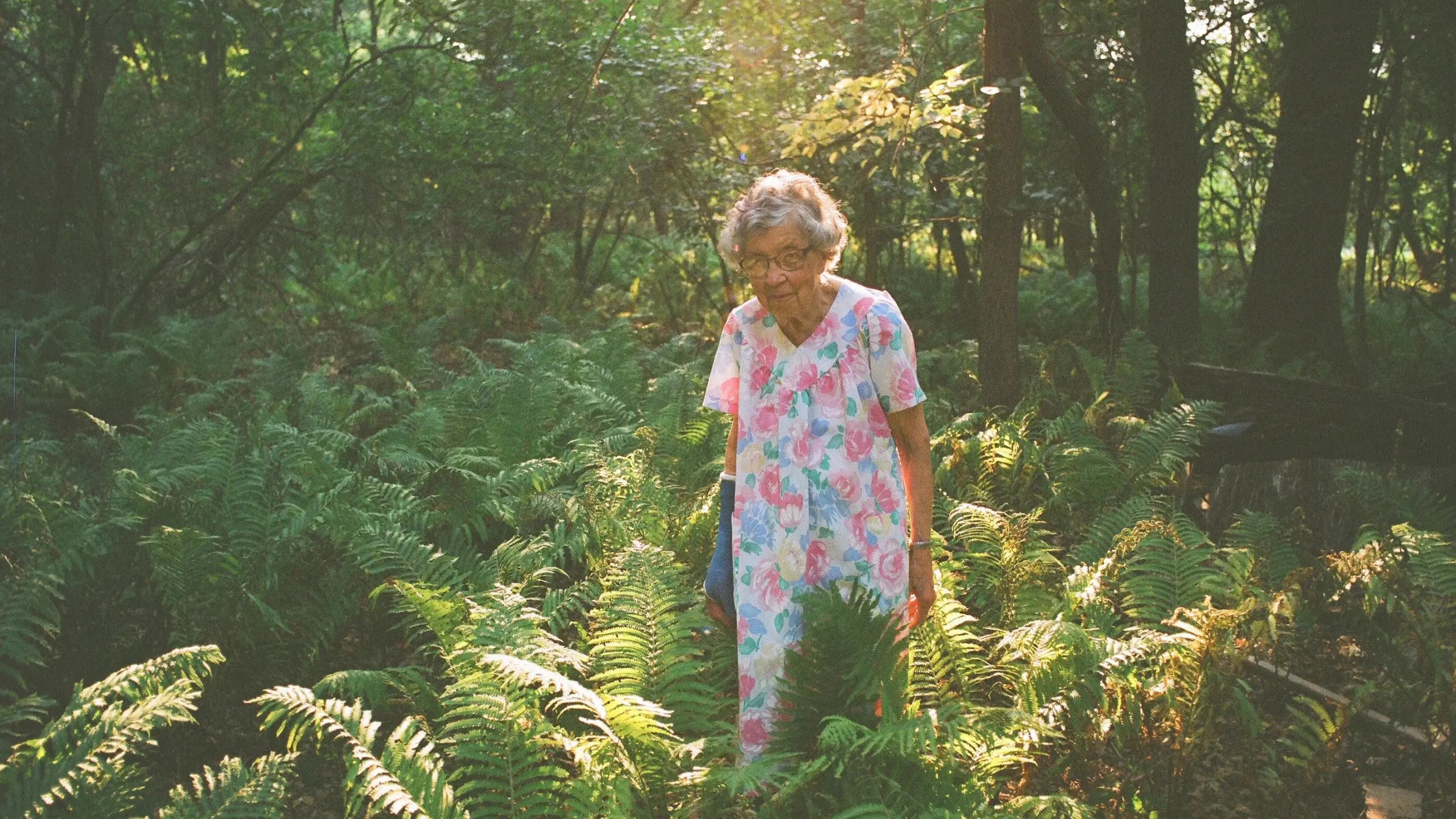
Ninety-year-old Agatha Bock lives alone on her farm in Manitoba, Canada, without a mobile phone, car or running water. Her days follow the rhythms of nature and the work of the land: sowing, harvesting, preserving and tending. Some of the seeds she grows have been passed down through her family for generations.
Agatha’s farm has remained largely unchanged since the 1950s, making it a living archive of a way of life that is slowly disappearing. Independent, practical and remarkably self-sufficient, Agatha repairs what breaks, knows her surroundings intimately and has little need for the conveniences on which modern life depends. Her daily existence stands in stark contrast to a society increasingly reliant on technology, mobility and comfort. At the same time, her way of life reveals how closely living, working and nature can remain intertwined.
AGATHA’S ALMANAC is the first feature-length documentary project by Canadian multidisciplinary artist Amalie Atkins, who followed her aunt for six years with an entirely female crew. Using her 16mm Bolex camera, she captures an apparently archaic, hands-on way of life, fully attuned to the seasons. This approach closely reflects Atkins’ wider practice, which combines 16mm film, performance, textiles, installation and analogue photography. Awarded Best Canadian Documentary at Hot Docs, AGATHA’S ALMANAC is an intimate portrait of a way of life that is slowly disappearing from our landscape.
Ahead of AGATHA’S ALMANAC on Tuesday 20 October, the short film METABOLIC WALL will be screened. The film explores the construction process and philosophy behind the architectural pavilion of the same name by Felix Verheyden and Thomas Gkikas. Nothing is permanent, the film’s subtitle, refers to the temporary nature of the installation in the hills of Pietrarubbia, Italy.
The makers approach architecture as a living and ephemeral process. The pavilion’s wooden grid structure is filled with locally sourced hay bales and deliberately designed to be gradually broken down by nature. Deer and wild boar feed on the hay, birds use it as nesting material, while insects and fungi slowly decompose it. Eventually, only the wooden skeleton remains, which is then dismantled and reused.