



Let There Be Light


Film history tells the story of films that constantly build upon each other. If there’s one contemporary director who knows this, it’s Paul Thomas Anderson, PTA for professional purposes. In PTA & HIS MASTERS, we look at the unofficial cinematic ancestors of Paul Thomas Anderson. We place the director – one of the greatest American directors of his generation – alongside the influences he shamelessly cites in his work. In PTA & HIS MASTERS, we link THE MASTER to John Huston’s LET THERE BE LIGHT.
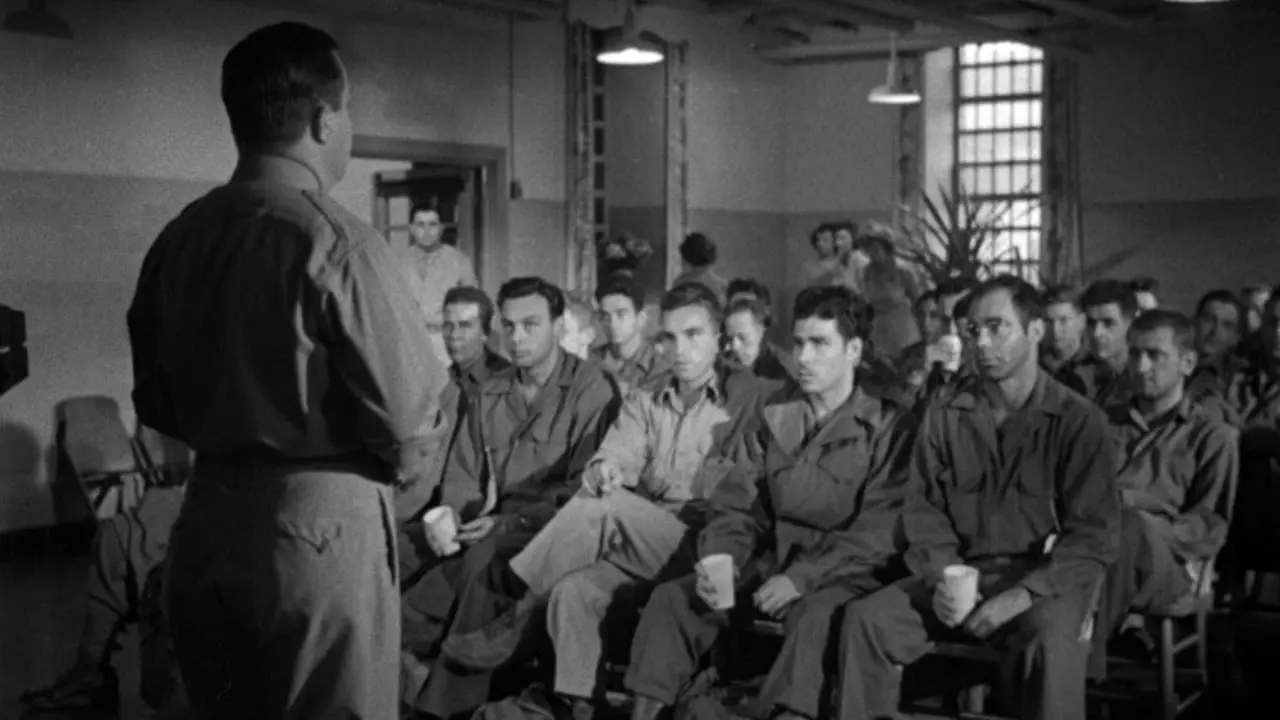
During his service in the US Army, Hollywood director John Huston shot three documentaries for the government: REPORT FROM THE ALEUTIANS (1943) about soldiers getting ready for battle, THE BATTLE OF SAN PIETRO (1945) about a failed attack that resulted in many casualties, and LET THERE BE LIGHT (1946) about traumatised veterans. For this last film, Huston followed patients in a military psychiatric hospital shortly after the end of WWII. The documentary shows the mental war victims suffering from PTSD and other neurological conditions. Huston candidly captures their symptoms, how they deal with these symptoms and how they are treated.
The film starts with an introduction that states that 20 percent of the war casualties are of a psychiatric nature. What follows, is an account of a group of veterans who are undergoing several psychiatric treatments over a period of two months. The audience is witness to the damage caused by war, not only physical or in terms of urban ruins, but in terms of devastating the minds of numerous soldiers.
During the production of LET THERE BE LIGHT, PTSD was not recognised as a condition and because of the unvarnished representation of the psychological horrors of war the American government halted the release of the film for decades. However what did get secured in that period was a legal framework for psychological suffering. In 1946 the U.S. Mental Health Act was approved and signed by president Truman, where mental health was finally destigmatized, which led to research, diagnosis and treatment.
For his sixth feature film THE MASTER, PTA studied Huston’s documentary extensively in order to depict the character of a returned, traumatized veteran as truthfully as possible. PTA did not only do this to approach his characters with as much respect as possible, but also to honour his father, a WWII veteran who returned from war scarred but did not want to face these traumas. For PTA the documentary was so important as a companion piece that he added LET THERE BE LIGHT as a special feature on the Blu-ray of THE MASTER.
Showtimes
All screenings have ended