



Wings
“Hey, if youse guys need kissin’ I’ll kiss you – wit’ a gun-butt!”
William A. Wellman’s war epic WINGS was the first-ever Best Picture winner at the Academy Awards. An iconic honour, which the movie was worth in many ways.
The story follows Jack and David, two young men from the same village who grow up as rivals. They come from different social classes and are in love with the same woman, Sylvia. In addition, Jack’s neighbour Mary has unrequited feelings for him. When the First World War breaks out, Jack and David enlist in the army as fighter pilots. Over time, the sworn enemies become best friends, while the war rages on in the background.
The screenplay of WINGS was written by screenwriting couple Hope Loring and Louis D. Lighton and was based on a story by John Monk Saunders. That story was rewritten at the request of It Girl Clara Bow, who played the role of Mary and was Paramount’s biggest star at the time. Bow was less than happy with her part: “WINGS is a man’s picture and I’m just the whipped cream on top of the pie.” Something had to be done. WINGS was released at the height of Clara Bow’s fame, when the actress was Hollywood’s biggest box office draw as well as the embodiment of the Roaring Twenties. Her role was given more depth and in the rewrite her character Mary joined the war effort as an ambulance driver.
As a former fighter pilot, director William A. Wellman had the right combat pilot experience to convincingly adapt this story to the big screen. Actor Richard Arlen, who plays David, had also served in World War I as a military aviator, so he performed his own stunts. And actor Charles Rogers, who plays Jack, underwent flight training during the production, so he could also be filmed in aerial closeup in the air. The spectacular aerial shots were the first in Hollywood history and Wellman wanted to show as much of the airplane scenes without cutting. Thus, WINGS has a couple of the most iconic shots in silent film history. It is incredible what Wellman was able to realise in a time where CGI was only a distant dream. The set counted hundreds of extras and three hundred pilots and the technical team developed an airborne camera system that could operate in the air to capture closeups and dogfights.
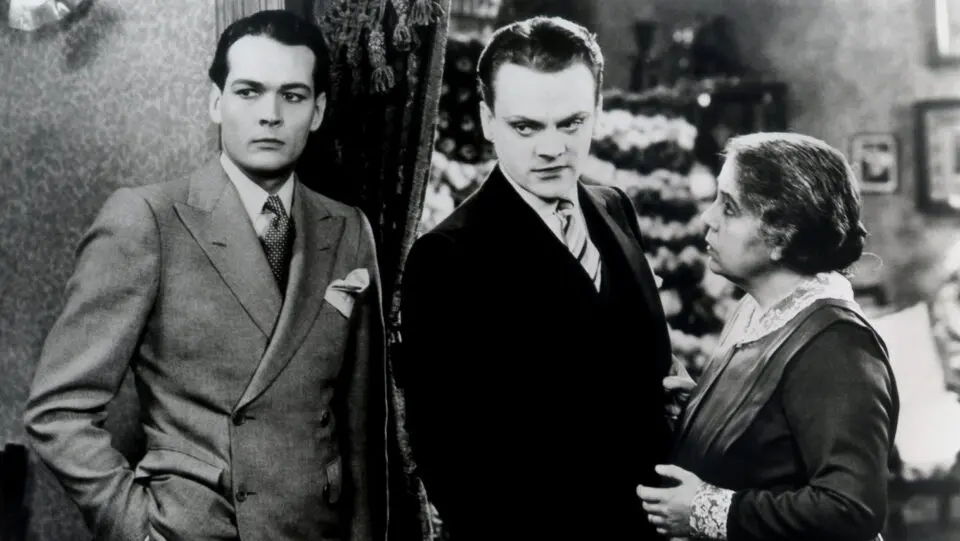
WINGS was released at the eve of the introduction of sound in film and is really set on the borderline, with title cards but with synchronised sound and sound effects as well. Incidentally, director William A. Wellman would later successfully make the transition to sound film, with box office hits such as THE PUBLIC ENEMY (1931).
WINGS announced the future of cinema, with its endless technical possibilities, by showing the audience something it had never seen before.