




Linda Linda Linda

When IndieWire asked top critics in 2018 to name the best Japanese film of the new millennium, the names of masters like Miyazaki and Kore-eda were naturally at the top of the list. David Ehrlich, however, took a different approach and championed Nobuhiro Yamashita’s LINDA LINDA LINDA. While he admits it may lack the heavy drama of its contemporaries, he states resolutely: “None of those films makes me happier than this one. It’s so rich, so charismatic, and so damn catchy, you’ll be itching to show it to all your friends.”
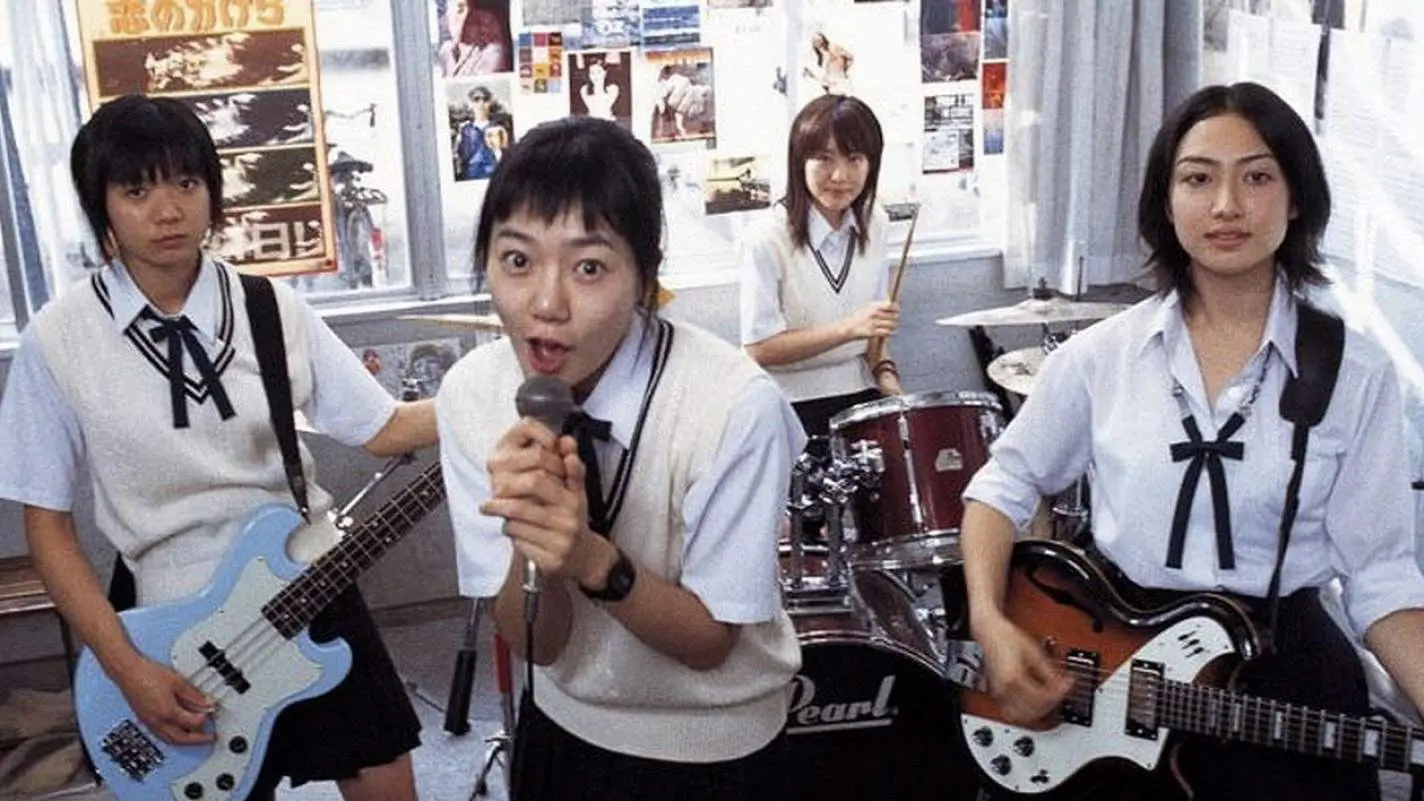
The story follows a group of girls at Shiba High School with only three days left until their final senior year festival. When their band threatens to fall apart due to infighting and injuries, the remaining members—keyboardist Kei, drummer Kyoko, and bassist Nozomi—decide to forge ahead anyway. On a whim, they ask the very first person who walks by to be their new lead singer. That person happens to be Son, a Korean exchange student who has barely mastered the Japanese language.
What follows is a heartwarming race against the clock filled with sleep deprivation, karaoke sessions, teenage boredom, and the awkward charm of adolescent crushes. As the rain spatters against the windows and the guitars are tuned, an unbreakable bond forms between the four girls. Linda Linda Linda is more than just a music movie; it is an euphoric ode to friendship, perseverance, and the timeless punk rock of The Blue Hearts.
Showtimes
All screenings have ended